
-
Services
-
Important news for Finnish-based companies and individuals – effective 03 August 2019, the United States Patent and Trademark Office (USPTO) will require all foreign-domiciled trademark applicants, registrants, and parties to Trademark Trial and Appeal Board proceedings to be represented by an attorney who is licensed to practice law in the United States. The current rules allow foreign-based individuals and companies to represent themselves before the U.S. Patent and Trademark Office in such trademark matters.
The requirement applies to all trademark applicants, registrants, and parties whose permanent legal residence or principal place of business is outside the United States (e.g., Finland). According the USPTO, “…this new rule will help improve the quality of submissions to the USPTO.” The announcement is at the link below:
If you are a Finnish individual or company whose permanent legal residence or principle place of business is within Finland, LAINE IP’s trademark team and own U.S.-licensed attorney, Mark Scott (who works within the firm’s Helsinki office, shown in the picture above), are available to serve your global and U.S. trademark needs. Please contact us at our offices or any our trademark practitioners directly.
The reform of the Finnish Trademarks Act has reached the final steps as the new Act has been ratified by the President of Finland on 26 April 2019. The new law will enter into force on 1 May 2019 implementing EU Trademark Directive ((EU) 2015/2436) and Singapore Treaty (Singapore Treaty on the Law of Trademarks 2006) and introducing a number of significant changes to the current trademark practice.
The aim of the reform is to get a clear, consistent and modern Act that enables a completely digital trademark process. The most relevant amendments to be adopted in the reform are outlined below.
The requirement for graphic or visual representation of a trademark will no longer be a prerequisite for protection. In line with the provisions in the European Union Trade Mark Regulation (EUTMR), the new provision now states that all trademarks which can be represented in the trademark register in such a way that the competent authorities and the public can “clearly and unambiguously determine the object of trademark protection” will be admitted for registration. The aim of this change is to facilitate the registration of new trademark forms, such as sound marks or multimedia marks.
Black and white trademarks filed under the new law will cover only the black and white version of the mark. It is important to note that trademarks filed and registered under the new practice in black & white but used in color can be invalidated by third parties due to non-use after five years.
The term of protection for trademarks filed under the new law expires 10 years after the filing date instead of the registration date.
One of the most significant changes of the reform applies to the classification of goods and services and what a list of goods and services is considered to cover. The main objective of this amendment is to make the trademark register clearer and more uniform. Under the new Act, applicants must clearly identify and sufficiently specify the applicable goods and services covered by the trademark.
The new Act offers trademark owners an opportunity to specify list of goods and services of trademark registrations which meet one of the following criteria:
The specification can be filed at any time after the new Trademarks Act has entered into force, and at the latest in connection with the next renewal of the trademark.
If no specification is requested, the scope of protection of the trademark registration is limited to those goods and services that are clearly covered in the literal meaning of the class heading in question. However, this does not apply to applications filed between 1 October 2012 and 31 December 2013 containing also references to the Nice alphabetical list. If the owner of such registration does not request specification, the Office will confirm that each class of the registration covers all the goods and services of the Nice alphabetical list and removes references to the Nice alphabetical list.
The above specification requirements also apply to international registrations designating Finland.
Once the new legislation comes into force, it will be possible to apply for administrative revocation and invalidation of trademark registrations at the Finnish Patent and Registration Office as an alternative to filing revocation or invalidation action to the Finnish Market Court. Registered company names can also be cancelled through an administrative procedure at the PRH in the future.
In opposition proceedings, it will be possible to request the proof of use of the opponent’s trade mark, if it has been registered for more than five years. The new Act also introduces possibility for the parties to file a joint request for suspension of the proceedings.
Our chemistry team attended the ChemBio 2019 – event on 27. – 28.3.2019 in the Helsinki Fair Center as an exhibitor. ChemBio is the biggest meeting place for experts in the chemical and bio fields with over 4000 attendants and over 140 exhibitors. The event has a lot of interesting program and seminars on current topics.
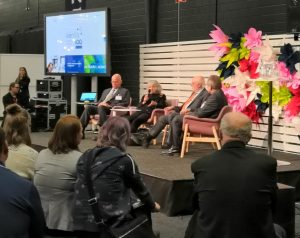
Nobelists Barry Sharpless (on the left), Ada Yonath and Fraser Stoddart with Professor Ari Koskinen on stage.
This year, ChemBio’s absolute attraction was the panel discussion of three nobelists on science, its future and its role in society. Barry Sharpless, Ada Yonath and Fraser Stoddart took part in the panel discussion which was led by Professor Ari Koskinen.
Other interesting seminar topics were for example “Future of food – what will we eat in the future” and “Intelligence and Artificial Intelligence – an unbeatable combination”, so the topics were sure to suit everyone’s taste. The exhibitors were also quite versatile from the field of chemistry and biotechnology all the way from different service providers to laboratory equipment manufacturers. By studying the area of the event, it was easy to get an idea of what is going on currently in the field of chemistry and biotechnology and in what direction development is going. In addition to the seminars and the exhibition event, ChemBio offered an excellent opportunity for networking, as there were plenty of visitors from all over Finland and abroad.
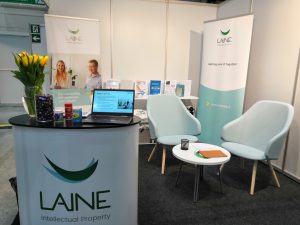
LAINE Intellectual Property
For the first time, Laine IP took part in the ChemBio event and the timing was excellent for the introduction of our new brand. At our stand, we had some of our client’s products, which we have helped protect, on display for the visitors to see. Inspired by concrete examples, patenting and trademark protection sparked brilliant questions from the event visitors for our experts to answer.
If you did not get to ChemBio this time, the next opportunity will be in April 2021, when it will be held together with the PulPaper event and the Helsinki Chemicals Forum. So the event is becoming even more versatile and interesting. See you at the fair!
When drafting patent applications, the choice of wording, particularly that of the claims, is always highly important. With the correct wording, you can avoid trouble relating to the relevant patent law.
The European Patent Convention, among others, indicates that a patent application should disclose the invention in a manner sufficiently clear and complete for it to be carried out by a person skilled in the art, while another section of the Convention states that the claims should be clear and concise and be supported by the description.
Thus, clarity and a complete description or a description providing support for the claims is mentioned in both sections. The main difference between the sections is that one focuses on the claims, and their clarity and support, while the other focuses on the description, and the support it provides to the claims.
There exists also another interesting issue, where the above mentioned section mentioning the disclosure of the invention in the description is compared to a further section focusing on the inventive step, or non-obviousness, of the invention.
The former section states that the application shall disclose “the” invention, whereas the latter section mentions “an” invention, and continues by comparing this invention to the state of the art.
The sufficient disclosure must be included in the description of the application at the point of drafting, after which no new matter or support can be introduced into the application.
However, the inventive step is determined based on the wording of the claims, which can be amended long after the point of drafting the application. For example, an amendment of the claims could have been made in view of a prior art document that became known to the applicant long after the application was filed at the Patent Office. Such an amendment could even be based on a feature that was mentioned in the original application as a type of by-plot.
However, the description in its original form should still provide sufficient support for the invention, as described in the amended claims.
Laine IP is very happy to announce our newest US team member: Mr. Mark W. Scott.
Mr. Scott is a US Patent Attorney (licensed in three US states) with 16+ years of experience assisting clients in defending, procuring, and asserting intellectual property rights. By way of example, Mr. Scott has expertise in patent and trademark application preparation and prosecution, and in the preparation of patentability, freedom to operate, and infringement opinions for clients ranging from start-up entities to large corporations.
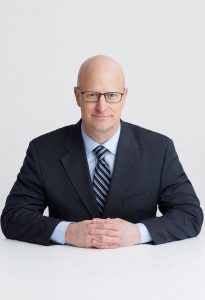
“I thoroughly enjoy working with clients to achieve their business interests.”
For the past 11.5 years, Mr. Scott has served as outside counsel and as in-house counsel for Siemens AG and its global organizations, including Siemens Energy, Inc. in the US. Mr. Scott has experience in a wide range of technologies, including but not limited to medical devices, diagnostic tests, new chemical entities, high temperature materials, wastewater treatment processes, gas turbine components and repair processes, manufacturing processes, and computer-related technologies.
Mr. Scott is located in Helsinki and mainly works with our chemistry patent practice, as well as advising clients in US IPR matters.
In his spare time, Mr. Scott enjoys film, studying languages, guitar, dogs, triathlons, and travel.
In 2018, the German Patent and Trademark Office (DPMA) received 21,286 patent applications from abroad. This means a significant increase of about seven percent compared with the previous year. Also the number of trademark applications from abroad rose to 4863, i.e. just under six percent.
Most patent applications from abroad came from Japan (8013), the United States (6669) and the Republic of Korea (1313). Trademark applications were mostly filed by applicants from China (1564), the United States (528) and the United Kingdom (450).
In total, 67,895 patent applications were filed with the DPMA in 2018. Most patent applications were filed in the fields of transportation (12273), electric machines, electric devices and electric energy (7420), machine elements (5872), measurement technology (4979) as well as motors, pumps and turbines (4274).
A significant rose of about 26,7 % in filing numbers took place in the fields of computer implemented inventions and artificial intelligence. The number of patent applications from automotive industry continued to increase further. Six car manufacturers and three suppliers are among the top ten applicants.
The total number of utility model applications decreased by 7,4 percent to 12311. The DPMA further received in total 42670 single designs, that is a decrease in 8,7 percent compared with the previous year.
Seppo Laine Oy is also active in filing of Intellectual Property Rights in Germany and our patent attorney Teemu Kiviniemi will be happy to answer any of our client´s questions.
Seppo Laine Oy has unveiled its new brand names, which are patent agency LAINE and the internationally operating LAINE Intellectual Property. Complementing our refreshed visual style, the new brand names will be an integral part of all our communications. The brand update is based on work that we have carried out together with our customers and employees.
As our business has grown and our operating environment has become more international, we wanted to carry out a well-planned brand update that would serve us well for years to come.
“Our core goals are to serve our customers and take care of our employees. These values should be reflected in how we communicate, so it was natural for us to involve our clients as well as our entire staff in generating ideas for the update,” says patent agent Päivi Takala, who is a member of Seppo Laine Oy’s communications team.
The project started with a customer analysis based on service design methodology. The goal was to understand and evaluate the needs and wishes that customers and employees have towards the company’s communications. “It’s great that Seppo Laine Oy began this process by listening to its most important stakeholder groups,” says Elina Piskonen, Head of Service Design at Kaiku Helsinki.
Piskonen notes that the project started off with a careful mapping of what kind of information Seppo Laine Oy’s customers need in their daily work, and which communication channels they use. “This enables us to gain insight into how we can genuinely help the company’s customers in their own work. Seppo Laine’s clients have varied work responsibilities and they represent a diverse range of organizations, so it’s imperative that all communications efforts can serve each target group in exactly the way they need it.”
Seppo Laine Oy is proud to announce its updated website and new visual style. The brand names of patent agency LAINE and LAINE Intellectual Property will form the core of our communications, while in official communications we remain Seppo Laine Oy just as before. At the same time, we have also moved to new premises in Porkkalankatu, Helsinki.
The update has introduced many new elements, without giving up what has worked well before. Our brand colors now include a touch of yellow, and the new style draws heavily on input from Seppo Laine Oy’s own employees and customers. The LAINE brand is about the joy of working together; a genuine passion for solving complex challenges; determination; and creativity.
Seppo Laine Oy continues its work under the brand names of patent agency LAINE and LAINE Intellectual Property. The most important thing for us is helping our customers succeed.
Viime vuosina, kun on tiedetty, että UPC-sopimus tulee (mitä todennäköisimmin) astumaan voimaan ”lähiaikoina”, on ollut paljon keskustelua uuden järjestelmän mahdollisista eduista ja riskeistä.
Patentinhakijoiden kannalta yhtenä merkittävänä etuna pidetään patenttisuojan saamista useissa Euroopan maissa aiempaa alhaisemmilla patentointikustannuksilla.
Se, että esim. mitätöimistoimet käsitellään keskitetysti, merkitsee toisaalta sitä, että riskit jokaista myönnettyä patenttia kohtaan kasvavat, koska patentti on kumottavissa Euroopan laajuisesti yhden tuomioistuimen toimesta.
Sopimus kuitenkin tarjoaa myös helpotusta niille, jotka pitävät riskejä suurempina. UPCA:n voimaantulon jälkeen, siirtymäkauden aikana, on käytettävissä opt-out -menettely. Käyttämällä opt-out -mahdollisuutta patentin voi jättää UPC:n keskitetyn käsittelyn ulkopuolelle, jolloin ko. patentti käsitellään kansallisissa tuomioistuimissa myös tulevaisuudessa. Opt-out -pyyntö on kuitenkin tehtävä ennen kuin patenttiin on kohdistunut mitään oikeustoimia.
Keskeinen kysymys onkin se, myönnetäänkö eurooppapatenttihakemus yhtenäispatenttina vai ”tavallisena” EP-patenttina, joka on validoitava yksittäisissä Euroopan maissa kansallisten patenttien saamiseksi.
Vastaus tähän kysymykseen voi olla hyvin erilainen riippuen keksinnöstä, patentointistrategiasta ja mahdollisesti tekniikan alasta. Esimerkiksi elektroniikan ja mekaniikan alalla keksintöjen suojaaminen useilla patenttihakemuksilla on tyypillisempää kuin kemiassa tai lääketieteessä.
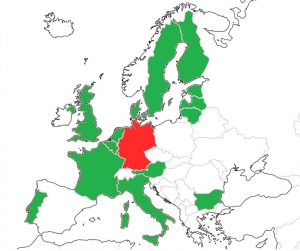
UPC-sopimuksen ratifiointitilanne. Sopimuksen rattifioineet maat on merkitty vihreällä – Saksa punaisella, koska se on väistämättä mukana systeemissä vaikka ei ole vielä ratifioinut sopimusta.
Biotieteiden alalla on tavanomaista, että arvokkaat tuotteet on suojattu muutamalla keskeisellä patentilla, jolloin jokainen patentti voi olla todella arvokas.
Yritykset, joilla on pieni määrä keskeisiä ”avainpatentteja”, saattavat pitää riskiä joutua keskitettyyn mitätöimiskäsittelyyn Euroopassa liian korkeana ja päätyvät näin ollen todennäköisesti hyödyntämään opt-out -mahdollisuutta.
Tällainen opt-out -strategia levittää mitätöimisriskin kansalliselle tasolle, vaatien mitätöimiskanteiden nostamista maakohtaisesti kansallisissa tuomioistuimissa.
Myös kemiallinen yhdiste on toki mahdollista suojata useammalla patentilla, esimerkiksi laatimalla hakemukset, joista yhden vaatimukset kohdistuvat yhdisteen valmistusprosessiin, toisen sen käyttökelpoisiin koostumuksiin tai annostusmuotoihin, kolmannen ja neljännen vaatimukset ensimmäiseen ja toiseen indikaatioon, vastaavasti jne. Koska kaikki nämä vaatimukset kuitenkin kohdistuvat yhteen ja samaan yhdisteeseen, ne ovat haavoittuvampia kuin sarja patenttihakemuksia, jotka suojaavat esim. suuremman tuotteen eri komponentteja.
Toisaalta, elektroniikassa ja televiestinnässä kuten myös ohjelmistoalalla, patentinhaltijalla voi olla suhteellisen suuri salkku, jossa patenttien yhteenlaskettu arvo jaetaan huomattavan suurelle (esim. sata) määrälle patentteja.
Sama pätee tyypillisesti mekaniikan alalla.
Tällaisessa tilanteessa Euroopan laajuisen kielto-oikeuden mahdollisuutta voidaan pitää niin hyödyllisenä, että se ylittää yksittäisten keskitettyjen mitätöimisten riskin, mahdollisten mitätöintien vaikuttaessa joka tapauksessa vain pieneen osaan patenttisalkun arvoa tuottavista patenteista.
Tällaisille patentinhaltijoille maantieteellisesti laajan kielto-oikeuden tuoma kaupallistamismahdollisuuksien kasvu saattaa olla hyvin arvokas ja painaa vaakakupissa enemmän kuin keskitetyn mitätöimiskäsittelyn riski. Tällöin opt-out -menettelyä ei ehkä nähdä kannattavana.
Koska UPC-sopimuksen voimaantulo voi olla hyvinkin lähellä, kannattaa jokaisen patentinhakijan alkaa miettiä omaa salkkuaan, erityisesti arvioiden patenttien ja tulevien patenttien arvoa sekä riskiä joutua kyseisen patentin kanssa oikeuteen.
Mikäli riski on suuri, voisi opt-out -mahdollisuus olla hyvinkin kannattava. Muussa tapauksessa, keskitetyn käsittelyn taloudellinen kannattavuus voisi merkitä enemmän.
Asiantuntijamme auttavat sinua mielellään tilanteesi arvioinnissa ja opt-out –strategiassa.
Significant new sections on important topics such as unity and inventions relating to mental acts, mathematical methods, computer implemented inventions and artificial intelligence have been introduced to the EPO Guidelines for Examination.
The list of major amendments can be found at: https://www.epo.org/law-practice/legal-texts/html/guidelines2018/e/m.htm
Relevant to practitioners in all fields of technology, the EPO has also more precisely formulated its position with regard to clarity of relative definitions.
The Guidelines now state that terms such as “about“, “approximately” or “substantially” cannot extend outside the error margins or the tolerances in the relevant technical field. This means that, for example, the expression “about 200 °C” is interpreted as having the same round-off as “200 °C“. Thus, adding words “about“, “approximately” or “substantially” do not change the meaning of the claim. If the intended meaning is different this needs to be specified in the application as filed and these error margins must be used in the claims in place of “about” or similar terms.
In a further example related to relative terms, the expression “an element mounted near the end of a truck” is interpreted such that the element must be nearer to the end of the truck than to its front, i.e. the element can be mounted anywhere in the second half of the truck. Similarly, the expression “thin” has a meaning only when compared to another entity with a greater thickness, but without these reference points, the words ”near” and ”thin” are not limiting the claim.
Defining a material as “elastic” does not limit the type of material, because elasticity is an intrinsic property of any solid material. Consequently, the term elastic material can cover anything from rubber to diamond.
Therefore, it is essential to give precise definitions to features and embodiments of your invention in the application as filed.
All the changes in the new Guidelines are valid from 1 November 2018.
As we previously announced, the United States Patent and Trademark Office has now formally granted Patent Number 10,000,000. The utility patent in question is titled “Coherent LADAR using intra-pixel quadrature detection” and it was invented by Joseph Marron and assigned to Raytheon. The patent was filed on March 10, 2015 and published as an application on September 15, 2016. The patent was granted after a single Office Action.

LADAR (Laser detection and ranging) works in a similar fashion to a radar system, except that the target is illuminated by a laser source and the return is detected by an optical detector. The technology is used in driverless cars along with video gaming technology, machine vision and other fields.
Briefly, the invention improves LADAR by using the following method: First , the target is illuminated using a light (122). The return light (124) from the target is focused on the detector array (126) by the imaging telescope (125) and interferes with light from the local oscillator (127). The detector’s photosensitive region is sampled four times during each clock cycle to obtain quadrature components, which are then used to determine information about the target based on the interference.
Patent 10 million also marked the introduction of the new design of the US Patent cover. The old cover was in use since 1985, so it appears that there is plenty of time to obtain a patent with the redesigned cover. In fact, as a result of our representation, a patent with the new cover has already been issued to one of our clients – the first of many more to come.

Laine IP Oy
Contact Details
Tel: (09) 6859 560
Fax: (09) 6859 5610
Email: posti@laineip.fi
Personnel Contact Information
Mailing Address
Laine IP Oy
PL 339
00181 Helsinki
Subscribe our Newsletter
Follow Us


Billing Information
Business ID: 0590525-5
VAT Number: FI05905255
Operator: Nordea
Operator ID: NDEAFIHH
e-Invoice Address: FI6221531800060138
 Contact
 Search